
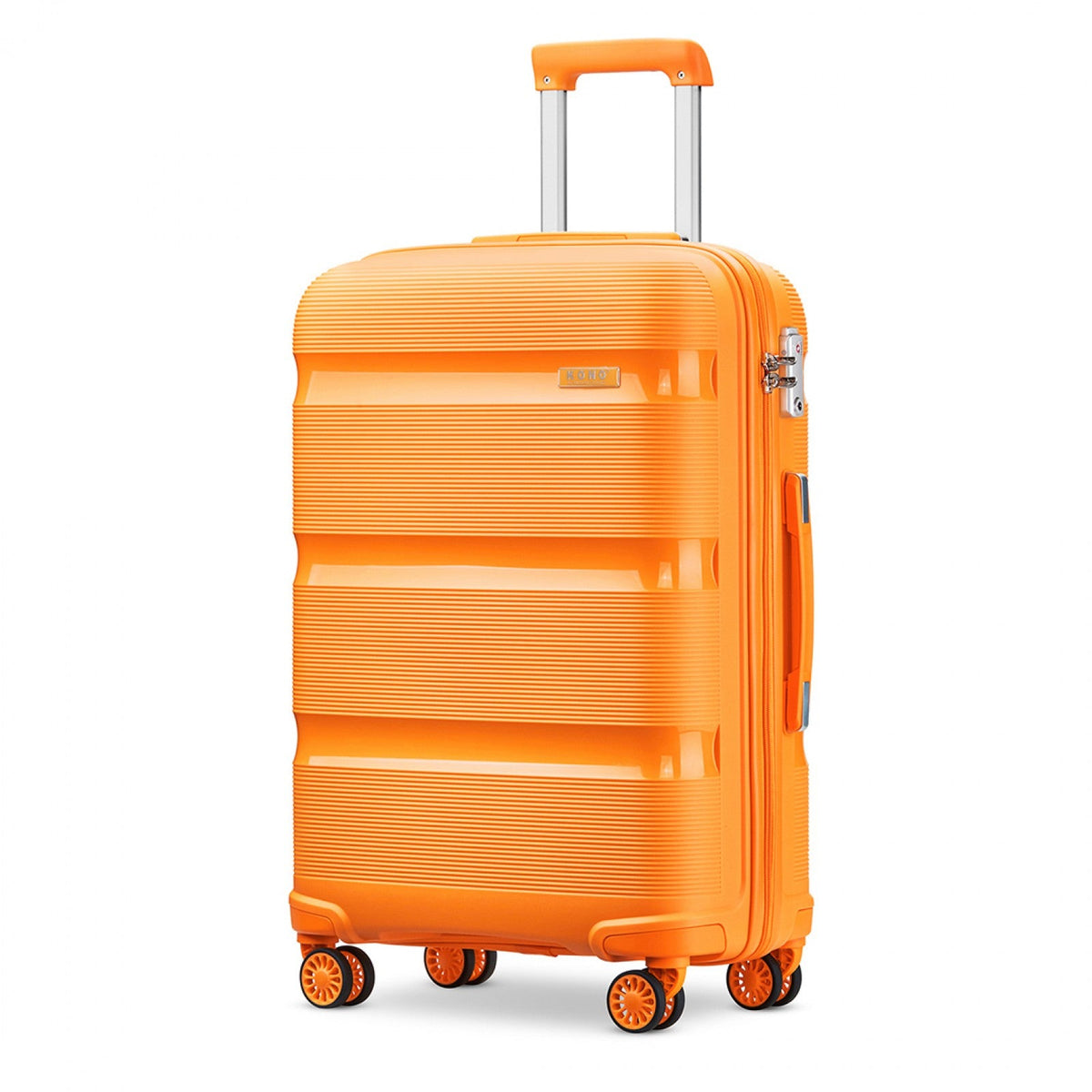
It is the first decision most suitcase buyers face, and there is no single right answer: hard shell vs soft shell suitcase. The better choice depends on what you pack, how you travel and what tends to go wrong on your trips. This is an honest breakdown of where each type genuinely performs better, without the marketing gloss, so you can pick the one that suits your travel rather than the one with the loudest claims.
Protection
A hard shell spreads knocks and pressure across a rigid surface, which protects fragile contents such as bottles, electronics cases and gifts far better than fabric can. If something heavy lands on your case in the hold, a shell resists crushing; a soft case flexes and passes more of that pressure to whatever is inside. The trade-off is that a hard shell can crack under a severe point impact, while quality fabric usually scuffs, dents or tears rather than failing in one go. For checked luggage carrying anything breakable, hard shell is the safer bet.
Weight and packing
Soft shell cases are often lighter for their size and, more importantly, they flex. That stretch helps in car boots, overhead lockers and wardrobes, and most have external pockets for documents, a book or a last-minute layer. Hard shells are fixed-volume: what fits is what fits, and they usually open like a book with two equal halves, which suits organised packing with cubes but is awkward in small hotel rooms. If you regularly squeeze souvenirs into an already-full bag on the way home, soft shell forgives you; a hard shell simply will not close.
Weather, security and wear
A hard shell shrugs off rain on a wet tarmac far better than fabric, and a smooth shell wipes clean. Soft fabrics can absorb water and pick up stains, though many are treated to resist both. On security, most hard cases have integrated combination or TSA-style locks built into the shell, while soft cases usually rely on padlocks through zip pulls. Zips are the weak point on both: a standard zip can be forced and resealed, which is why better cases on both sides use stronger zip designs. Visually, hard shells show scratches; soft shells show scuffs and fading. Neither looks new forever.
Repairs and lifespan
Wheels and handles are the parts that actually fail most, on both types, and they are replaceable on better-made cases either way. A cracked shell, though, is effectively the end of a hard case, while a soft case can often be re-stitched or patched by a repair shop. Conversely, quality shell materials such as polypropylene flex rather than crack in most real-world knocks; we go deeper on shell materials in our guide to PP vs ABS suitcases.

What drives the price
On both sides, cost follows materials, wheels, zips and locks rather than the label. A polypropylene or polycarbonate-blend shell costs more than basic ABS; double spinner wheels cost more than two fixed wheels; branded zips and integrated locks add up. A well-made soft case with strong fabric and good zips can outlast a cheap hard shell, so judge the components, not just the category.
| Factor | Hard shell | Soft shell |
|---|---|---|
| Protection for fragile items | Stronger | Weaker |
| Packing flexibility | Fixed volume | Flexes, external pockets |
| Wet weather | Wipes clean, sheds rain | Can absorb water |
| Visible wear | Scratches | Scuffs and fading |
| Typical failure | Cracked shell (rare, terminal) | Torn fabric or seams (often repairable) |
| Best for | Checked trips, fragile contents | Car trips, overpackers, cabin use |
The verdict by traveller
Fly with checked luggage and anything fragile? Choose hard shell. Drive more than you fly, pack at the last minute and use every pocket? Choose soft shell. Mostly cabin-only weekends? Either works, and weight and exact airline dimensions matter more than the shell debate. Whichever side of the hard shell vs soft shell suitcase question you land on, you can browse both in our full luggage collection, where every case lists its dimensions, material and weight so you can compare like for like.